
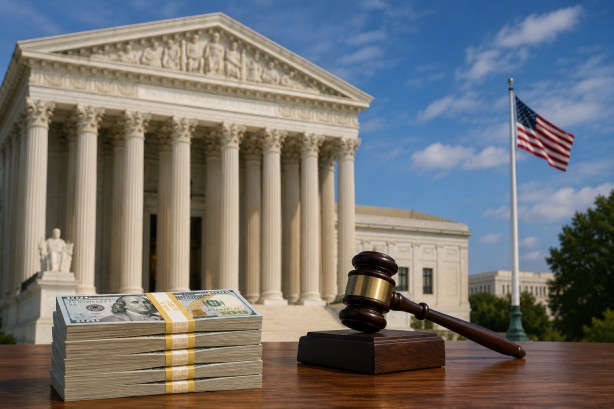
The United States government has issued $81 billion in tariff refunds to businesses following a Supreme Court ruling that deemed a substantial portion of the tariff measures introduced by former President Donald Trump as illegal. This refund amount marks a significant rise from the $5 billion returned during the equivalent timeframe last year, reflecting the impact of the court’s decision that required the government to return duties paid under the now-invalid tariffs. Treasury budget figures indicate that the majority of these refunds were processed in May and June.
This large-scale refund process has further expanded the federal budget deficit, which reached $1.367 trillion over the initial nine months of the fiscal year. The nation’s financial obligations have been exacerbated by not only these repayments but also by increasing interest payments on national debt and heightened military expenditures. Such financial dynamics underscore the broader fiscal challenges facing the government in managing its budgetary commitments.
Despite the legal setback, the Trump administration is actively planning to introduce a new series of tariffs. These forthcoming measures are intended to target various countries based on their trade practices, issues of industrial overcapacity, and enforcement of anti-forced labor regulations. Proposed tariff rates for this new initiative are anticipated to fall between 10% and 12.5%, with additional duties potentially affecting several major trading partners.
The administration’s push for new tariffs suggests a continued focus on reshaping international trade relationships and addressing what it perceives as unfair practices. As the global trade landscape evolves, such measures will likely play a significant role in defining economic interactions and policies moving forward.