
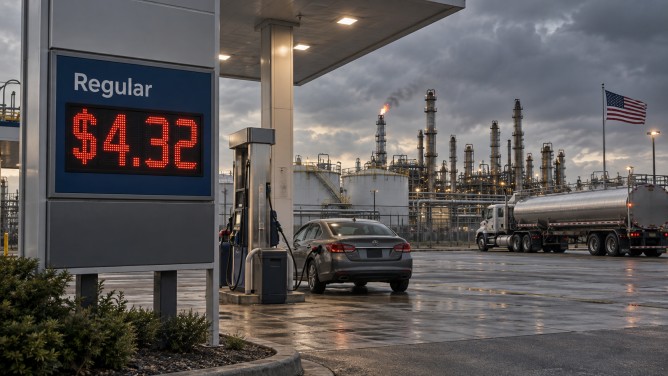
As gasoline prices soar to an average of $4.32 per gallon across the United States, the impact is being felt far and wide, affecting daily commutes and household budgets. This surge in fuel costs comes at a time when global oil supply anxieties and geopolitical tensions are putting additional pressure on energy markets.
The recent increase of nearly 25 cents per gallon in just two weeks, as reported by the US Energy Information Administration, highlights the volatility in the market. This spike is particularly stark when compared to the same period in 2024, when prices hovered around $3.18 per gallon.
At the core of these rising prices is the global crude oil market, which is being rocked by conflicts and disruptions in key regions such as the Middle East, Iran, and Ukraine. These geopolitical issues have sparked fears regarding oil supplies, thereby driving up energy costs.
Moreover, diesel prices have climbed to record levels, exacerbating the situation by increasing transportation and shipping expenses. The ripple effect is expected to contribute to higher consumer prices, as the cost of moving goods across the country rises.
Typically, gasoline prices dip during the fall due to the transition from summer-grade to cheaper winter-grade fuel. However, analysts warn that the ongoing geopolitical risks might prevent the usual seasonal decrease this year.
Compounding the issue, the US Strategic Petroleum Reserve has been significantly depleted, reducing the government’s capability to respond effectively to further major supply disruptions. This lack of emergency oil reserves could lead to sustained high prices if another crisis occurs.
Energy experts anticipate continued fluctuations in fuel prices driven by the ongoing developments in the Middle East and the Russia-Ukraine conflict. While any seasonal downturn may offer temporary relief, persistent supply risks suggest that elevated prices could remain the norm for the foreseeable future.