
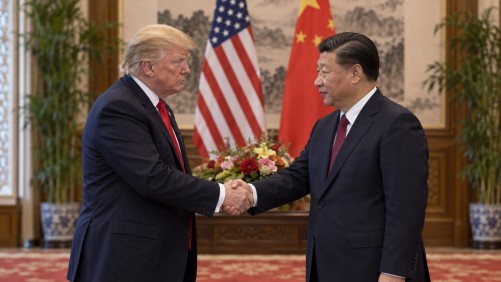
The anticipated meeting between U.S. President Donald Trump and Chinese President Xi Jinping could have significant implications for global trade and technology. As these two major powers continue to grapple with disagreements over issues such as trade tariffs, artificial intelligence (AI), and Taiwan, the outcomes of their discussions may affect international economic stability and technological cooperation.
Set in the United States, this meeting marks the second direct interaction between Trump and Xi this year. Despite efforts to mend ties, the relationship between Washington and Beijing remains fraught with tension. One of the focal points will be AI, with the U.S. proposing a framework for dialogue on AI safety and governance. However, differing perspectives on AI development and associated risks could hinder progress, especially given current U.S. restrictions on Chinese access to advanced semiconductors critical for AI advancement.
Trade discussions are expected to be equally challenging. The looming expiration of a temporary U.S.-China trade agreement in November, which includes tariff measures and restrictions on Chinese rare-earth exports, underscores the need for stable trade relations. While China seeks long-term certainty, the U.S. views trade restrictions as a strategic bargaining tool, complicating negotiations.
Taiwan remains a contentious issue, with U.S. defense ties to the island at odds with China’s territorial claims and opposition to American arms sales to Taipei. This aspect of the talks is likely to remain sensitive, as future U.S. weapons sales could further strain relations.
Beyond bilateral issues, the leaders are expected to address broader international concerns, including tensions involving Iran and Ukraine. China’s economic ties with Iran and its relationship with Russia highlight its pivotal role in these conflicts. The upcoming meeting offers an opportunity for the U.S. and China to manage their strategic rivalry while maintaining open communication on critical global matters.