
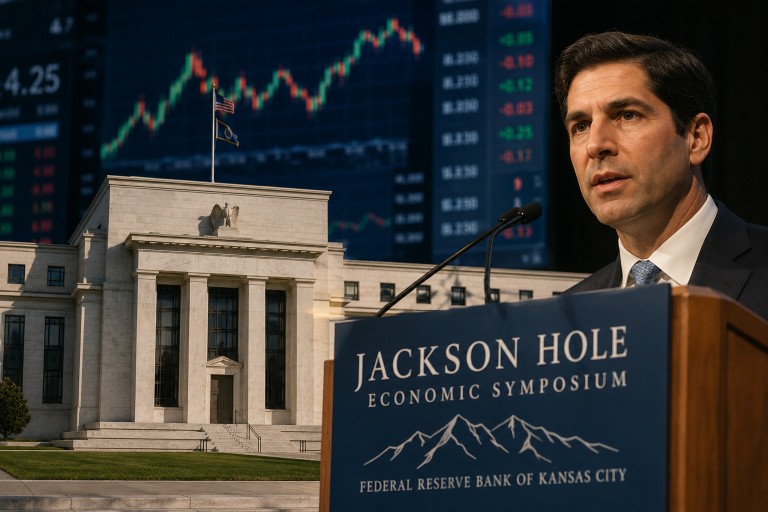
As the financial world turns its focus to the upcoming speech by US Federal Reserve Chair Kevin Warsh at the Jackson Hole symposium, investors are eager for insights on the trajectory of interest rates, inflation, and the implications of rising Treasury yields on the Federal Reserve’s monetary policy. Warsh’s recent shift away from providing detailed forward guidance has led to increased uncertainty, prompting investors to pay closer attention to market signals to gauge the Fed’s next steps in addressing inflation, which remains above the desired 2% target.
The landscape has been further complicated by the rise in long-term Treasury yields. Many investors contend that these higher yields are already tightening financial conditions, which may reduce the necessity for additional interest rate hikes. This perspective gained traction following the US Treasury’s decision to increase its buybacks of long-dated bonds after a recent market sell-off. Although officials have stated that this move was intended to bolster market liquidity, it has been perceived by investors as an attempt to alleviate pressure on long-term borrowing costs.
Warsh’s Jackson Hole address is anticipated as a crucial moment for the markets, which are looking for a definitive commitment on how the Federal Reserve plans to steer inflation back to its 2% target. The question of whether further rate increases will be required hangs in the balance, as investors seek clarity on the Fed’s future policy direction. The interplay between bond market conditions and the Federal Reserve’s decisions remains a focal point of interest.
Overall, Warsh’s approach and the Federal Reserve’s policy direction are poised to significantly influence market dynamics. With the current environment characterized by uncertainty and speculation, the Jackson Hole speech is expected to provide pivotal signals that could shape the economic outlook and investor strategies in the coming months.