
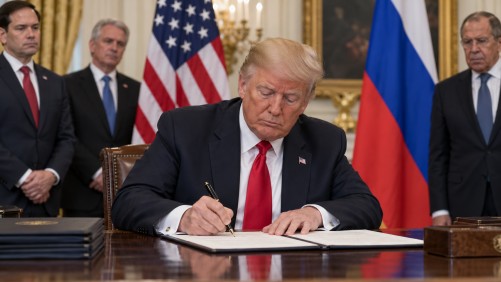
In a significant policy move, U.S. President Donald Trump has decided to suspend key sanctions and tariffs against Russia, citing the national interest of the United States. This decision, announced through an executive order on Friday, halts measures set to take effect under the Lindsey O. Graham Sanctioning Russia and Iran Act of 2026. The legislation aimed to ramp up economic pressure on Moscow in response to its invasion of Ukraine.
The suspended sanctions included tariffs of up to 100% on imports from major purchasers of Russian oil and natural gas, alongside penalties for countries aiding Russia in evading existing sanctions. The executive order allows the waiver to remain effective until Trump or other authorized officials decide additional action is needed, with the law permitting the president to suspend these measures upon notifying Congress that it serves the national interest.
This decision has sparked criticism from Democratic lawmakers who contend that it undermines efforts to hold Russia accountable for its actions in Ukraine. They argued that the sanctions were expected to restrict Moscow’s energy revenues and limit its access to international markets. Additionally, some countries like China and India, key importers of Russian oil, had voiced concerns over the potential impact of the U.S. restrictions on international trade and bilateral relations.
Trump’s approach has faced growing criticism amid his administration’s warmer engagement with Moscow and public disagreements with Ukrainian President Volodymyr Zelenskyy. The controversy is compounded by a separate diesel supply arrangement involving Russia, defended by Trump as an effort to increase fuel supplies and ease global energy prices. Critics question whether this agreement could inadvertently boost revenue for Moscow.
The suspension of these sanctions and tariffs introduces uncertainty about when, or if, the measures will be implemented, as Washington continues to navigate the balance between pressuring Russia and addressing concerns over energy costs and international economic relations.