
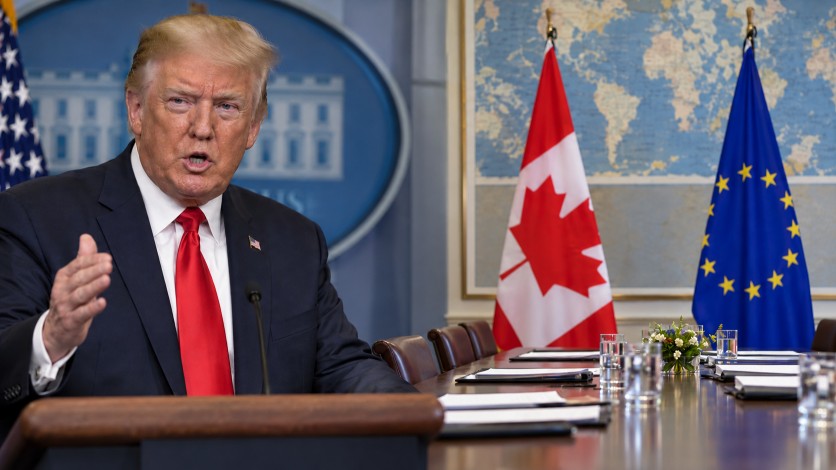
U.S. President Donald Trump has expressed optimism about a swift resolution to the trade dispute with Canada, suggesting that Ottawa is ready to make concessions. This statement comes amid ongoing tensions and follows the implementation of tariffs on Canadian goods by the Trump administration, which have been justified as necessary to address perceived unfair trade practices against the United States.
Speaking at a rally in Port Huron, Michigan, Trump defended his administration’s tariffs, emphasizing their role in correcting trade imbalances. “I had to do it,” Trump told supporters, asserting that the disagreement with Canada would soon be resolved, with Canada allegedly willing to make significant compromises.
The tariffs, however, have sparked concerns among businesses, particularly in the automotive sector, which relies heavily on the integrated supply chains between the U.S. and Canada. Republican Congressman Mike Rogers, campaigning in Michigan, acknowledged these concerns, despite welcoming manufacturing investments in the state.
In the midst of these trade tensions, Canada is actively pursuing stronger economic ties with the European Union. Canadian Prime Minister Mark Carney, alongside European leaders, is exploring closer cooperation in areas such as defense, artificial intelligence, and critical minerals. These discussions aim to diversify Canada’s economic relationships and reduce reliance on the U.S. market.
The prospect of deeper integration with the EU has sparked debate, with proposals for expanded cooperation in education, satellite navigation, and security initiatives. While Canada and the EU already have a trade relationship under the Comprehensive Economic and Trade Agreement (CETA), some elements remain incompletely implemented. The idea of closer Canada-EU ties has faced criticism from Trump, who views it as a hostile move.
As negotiations continue, Canada’s efforts to diversify its international partnerships could reshape its economic landscape. Meanwhile, Washington’s tariff policy remains a critical issue for businesses and political leaders on both sides of the border, highlighting the complex dynamics of international trade relations.