
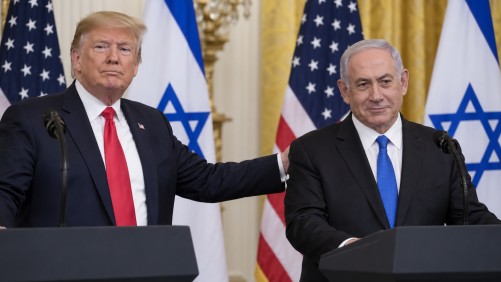
Former U.S. President Donald Trump has thrown his support behind Israeli Prime Minister Benjamin Netanyahu as Israel approaches its elections on October 27. Trump’s endorsement, announced on his Truth Social platform, underscores the potential implications for U.S. involvement in Middle Eastern security, particularly concerning Iran, should there be a change in Israeli leadership.
Trump praised Netanyahu for his leadership and collaboration with the United States, suggesting that a shift in Israeli governance might lead to increased American responsibility in addressing Iran-related security challenges. This endorsement comes at a crucial time for Netanyahu, who is contending with criticism and political hurdles, especially concerning Israel’s security strategies, the ongoing conflict in Gaza, and the nation’s international reputation.
The Gaza conflict has intensified scrutiny on Israel, with significant international backlash over the humanitarian impact. Palestinian authorities have reported extensive casualties and damage to infrastructure since the conflict erupted in October 2023. In a separate legal development, the International Criminal Court issued arrest warrants in November 2024 for Netanyahu and former Israeli Defence Minister Yoav Gallant for alleged war crimes in Gaza. Additionally, the International Court of Justice is hearing a case filed by South Africa accusing Israel of violating the Genocide Convention.
Trump’s backing of Netanyahu adds a notable international dimension to the Israeli election campaign, highlighting the close ties between the U.S. administration and Netanyahu. This support may influence voters who view the U.S.-Israel relationship as a critical factor in their decision-making at the polls.
As Israel heads to the polls, the outcome could have significant ramifications not only domestically but also on the international stage, particularly in relation to U.S. foreign policy and its involvement in the region’s security dynamics.