
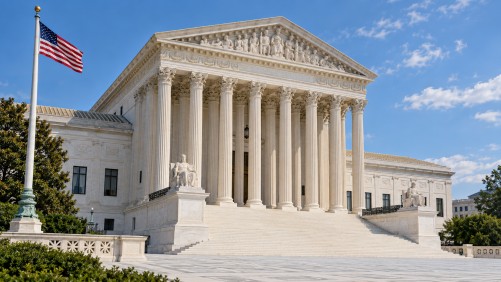
The US Supreme Court has temporarily halted a lower court’s directive that required the Federal Communications Commission (FCC) to quickly resolve objections to a new political advertising rate policy. This pause comes as the Supreme Court considers an appeal from the Trump administration, which challenges the lower court’s decision to expedite the FCC’s ruling before the upcoming November midterm elections.
The core of the dispute is a policy introduced by the FCC in March, which extends the benefit of the lowest advertising rates to political party advertisements coordinated with candidates. Previously, this advantage was limited only to advertisements paid for directly by candidates. Several Democratic candidates, including Georgia Senator Jon Ossoff, have contested this policy, arguing that it unfairly benefits opposing campaigns and have sought judicial intervention ahead of the elections.
The 4th US Circuit Court of Appeals had criticized the FCC for its delay in addressing the Democrats’ objections, suggesting that the agency’s actions might prevent a court review of the policy before voters head to the polls. The Justice Department, however, defended the FCC’s timeline, noting that the agency was still in the process of gathering public comments and that a delay during election season was justified.
In September, the Supreme Court ruled that the appeals court could not block the policy until the FCC completed its internal review. The recent Supreme Court order further prevents the lower court’s deadline from taking effect while the administration’s appeal is under consideration.
This case has significant financial implications for congressional campaigns, as political committees tied to Republicans have raised more funds than their Democratic counterparts. Access to lower advertising rates could thus influence campaign spending in closely contested races.