
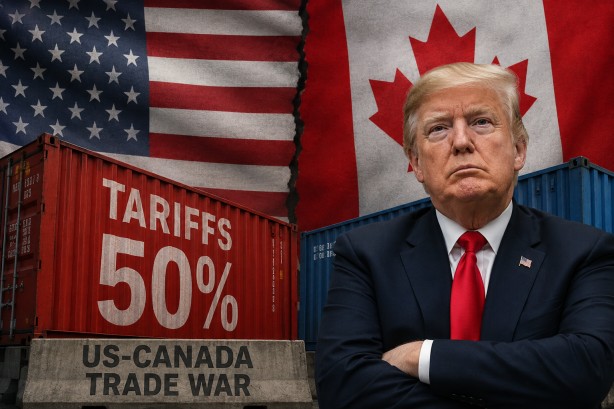
The trade dispute between the United States and Canada has intensified following a breakdown in negotiations in Washington, D.C. In a significant development, President Donald Trump has announced the imposition of 50% tariffs on approximately $20 billion worth of Canadian goods. This new measure impacts a range of products, including hockey sticks and medical supplies.
Canadian Prime Minister Mark Carney has responded firmly, pledging to enact reciprocal tariffs on U.S. goods starting September 8. Carney condemned the U.S. actions as an assault on Canada, asserting that his government would not concede to the demands presented during the recent talks. In defense of the U.S. stance, Trade Representative Jamieson Greer argued that the tariffs are essential to safeguard American jobs and supply chains.
This escalating trade conflict has sparked concerns over the future viability of the United States-Mexico-Canada Agreement (USMCA), a pivotal trade pact among the three countries. The USMCA governs about $2 trillion in annual commerce, underscoring its critical role in the economic landscape of North America.
The ongoing dispute threatens to raise costs for both businesses and consumers, potentially leading to further economic discord between the two nations. As tensions rise, the economic relationship between the United States and Canada faces increasing strain, with broader implications for the region’s economic cooperation and stability.