
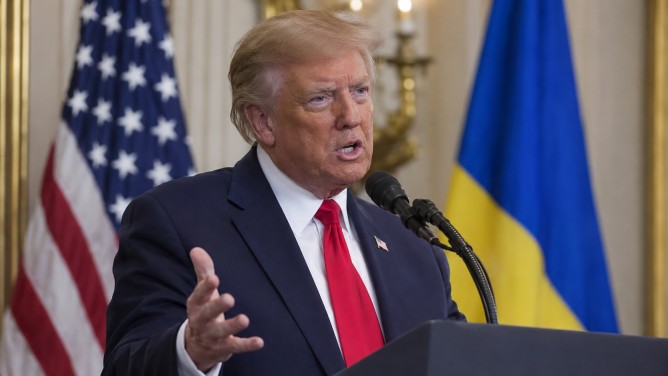
In a recent discussion at Mar-a-Lago, Florida, former U.S. President Donald Trump defended his characterization of Russian President Vladimir Putin as a “friend,” emphasizing his focus on achieving a peace agreement to end the ongoing conflict in Ukraine. Trump argued that maintaining a diplomatic relationship with Putin is crucial for advancing peace negotiations, despite criticism from Ukrainian President Volodymyr Zelensky.
Trump highlighted the importance of open communication, stating, “We want to make a deal. We want to stop killing. I could say he’s not a friend… I want to make a deal. I got to get a deal done.” He suggested that the strained relations between Putin and Zelensky were hindering efforts to reach a peace settlement and underscored the necessity of diplomacy, even when disagreements exist between leaders.
Addressing accusations of being lenient towards Russia, Trump refuted claims that his friendly remarks toward Putin imply a soft stance. He cited the sanctions and economic measures imposed on Russia during his presidency as evidence of his tough approach to Moscow. Trump also expressed confidence in Putin’s willingness to negotiate an end to the conflict, reiterating his preference for a diplomatic resolution.
Ukrainian President Zelensky, in an interview published on November 26, criticized Trump’s description of Putin as a friend. Zelensky labeled Putin as an aggressor, suggesting that the notion of friendship between Trump and Putin was inappropriate given Russia’s actions against Ukraine. He drew a parallel to maintaining friendly ties with Adolf Hitler during World War II, emphasizing the severity of the situation.
This exchange highlights the ongoing differences in perspective between Washington and Kyiv regarding diplomatic engagement with Moscow and how best to approach the resolution of the war in Ukraine.